

All-in-one spread complete with thoughtful pairings and a tasting guide.



Gifting has never been easier
Perfect if you're short on time or are unable to deliver your gift yourself. Enter your message and select when to send it.


I'm Chef Mike, one of the top ten cooks in America. I've worked in food for 20 years and I don't mess around with cheese. Here's my honest case for why a box like this is worth it, and why it's not the same as grabbing cheese at the store.
 By
Chef Mike, Top 10 Cook in America | Updated this week
By
Chef Mike, Top 10 Cook in America | Updated this week

Here's what nobody tells you. There are thousands of cheeses in the world, made in small batches by single producers in specific regions, and most people will go their whole lives having tried a tiny handful of them. Not because they don't care. Because grocery stores stock what they can move at scale, and that's a very short list.
That's the part worth sitting with. It isn't artisan. It's industrial. And the cheeses that would actually change your mind, the ones that are too bold, too small-batch, or too short-lived to sit on a shelf, never make it anywhere near your cart. That's the gap the AppyHour Box closes.
So let me answer the questions I'd be asking if I were you: is this really different from the store, couldn't I just do it myself, and is it worth the money? Fair questions. Straight answers.
Real artisan cheese comes from small farms and single producers, often families who've been doing it for generations. Those operations don't have the volume, the shelf life, or the marketing budget the big brands do. So the aisle defaults to the same handful of names: the same brie, the same gouda, the same cheddar, week after week.
None of that is a scandal. It's just scale doing what scale does. But it means the ceiling on what you've tasted has been set by a distribution problem, not by your palate. AppyHour sends two artisan cheeses and two cured meats at a time, sourced from those small producers, with a tasting guide that tells you exactly what you're eating and what to pair it with.

That word gets thrown around until it means nothing, so here's the actual difference. Industrial cheese is made by adjusting the milk to fit the recipe. If the milk is short on fat or solids, you correct it, because the whole point is that the product is identical every single time. Artisan cheese works the other way around: the maker tests the milk and adjusts the cultures and the rennet based on what that milk is doing that day, from that herd, in that season.

That's why artisan cheese lingers and evolves on your palate, and why the consistent stuff, by design, never does. Industrial cheese tends to be one note. It's there, it's fine, and then it's gone. Artisan cheese has a second act. Once you've had a few, you'll start noticing which one you're eating without being told.
If anyone tells you cheese pairing is just whatever you have on hand, they don't know what they're talking about. There's real logic to why certain flavors work together, and it comes down to a handful of variables you can actually learn.
That's the part you can't buy off a shelf, and it's exactly what the tasting guide in every box hands you: for each cheese, what to put beside it and what to pour with it, written out so you're not guessing. No filler, no fluff.
You could, and if you enjoy it, keep doing it. But here's what actually happens at the counter. Forty options, no map. You grab the cheese you recognize, a salami, some crackers, and it's good the way a pile of good ingredients is always good. It just isn't composed.

And there's the sourcing problem underneath it. Even a strong specialty shop carries a fraction of these producers, and most people don't have a strong specialty shop. You're not paying for ingredients you could gather yourself. You're paying for the pairings and for access to cheese you'd have real trouble finding on your own. Someone who does this for fun put it better than I could:

Most people also can't assemble this for less. Between two artisan cheeses and a bonus one, two cured meats, the jam, the nuts and the crackers, buying it piece by piece means a lot of half-used packages going soft in the back of your fridge. As one member put it: "I don't even think I could buy all the things on my own for cheaper, and definitely wouldn't know how to pair them." Another said it was "so much better than my last charcuterie board from a well-known company that charges way more."
Let me get specific, because vague doesn't help anybody. These are a few of the makers whose work rotates through, so you're meeting something new each time, and the tasting guide tells you exactly how to approach each one. You can see what's in the current box any time.
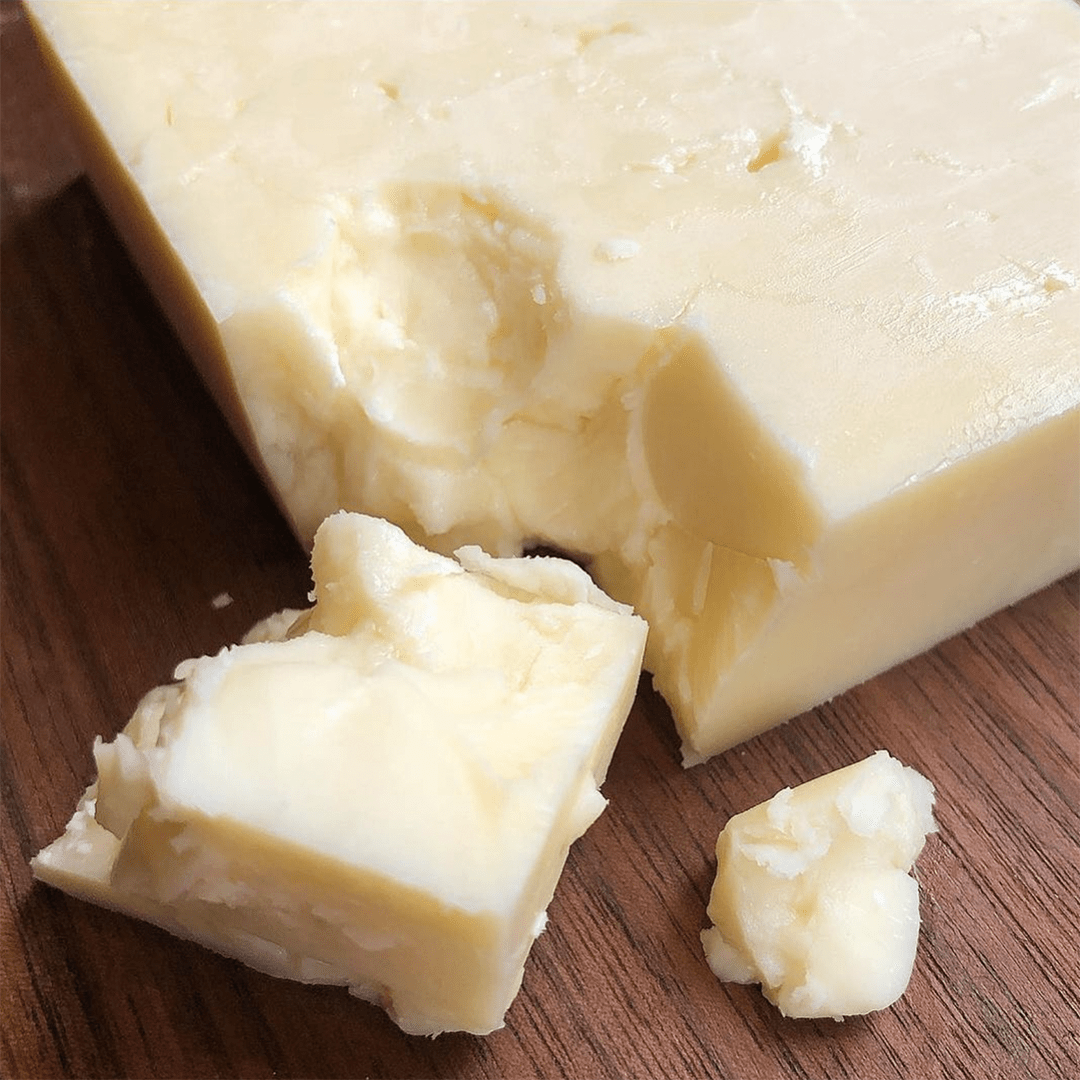
Crumbly, sweet, nutty, with a caramelized finish you'd never expect. Aged nine months.

From one of the country's most decorated cheesemakers. Sweet, earthy, with real clover notes.

A Venetian truffle cheese aged under spiced ash, black truffle folded right into the paste. Earthy and silky.

Aged sheep's milk marbled with black garlic. Buttery and nutty, with a caramelized sweetness.

Pierced and bathed in wine. Nutty, fruity, with a bright finish that stops you mid-bite.

Smooth and buttery, wrapped in a striking rind of wildflowers and herbs.
Take the Prairie Breeze. It's crumbly, sweet, nutty, with a caramelized finish you would not see coming from a cheddar. After your first bite you'll walk past that orange block in the dairy section and know exactly what you're not settling for anymore. That's the whole thing in one cheese. And the lineup rotates every box, so you're never handed the same thing twice.

Here's the practical worry, and it's a fair one: this is perishable, so how does it survive shipping? Every box is cut to order and shipped cold, packed to arrive in good shape on whatever schedule you set. You open it, read the guide, and you're ready. Nothing to prep. Members say the same:
I cook for a living, so understand what it costs me to say that. The thing I like most about this box isn't any single wheel. It's what it's for. This is for date night. This is for entertaining. This is for a random Tuesday when you deserve something better than whatever's in the fridge. It becomes a standing reason to sit down with people and slow down.

One member calls her deliveries "'forced' hangouts every six weeks." Another turned it into a monthly date night. A third threw a ladies' night, ages 28 to 93, and said not a single bite went unenjoyed. A grocery run doesn't give you that. And because it arrives on the cadence you set, weekly or every few weeks, the occasion keeps coming back around.
| The grocery cheese run | The AppyHour Box | |
|---|---|---|
| Selection | The same mass-made names | Small-batch artisan, sourced worldwide |
| How it's made | Milk adjusted to fit a recipe | Makers who listen to the milk |
| Pairing | Up to you to guess | A tasting guide in every box |
| The occasion | Just groceries | A reason to gather, on a schedule |
It arrives on the schedule you choose, every couple of weeks or further apart, no commitment, and you can skip or cancel any time. And there's one more thing worth knowing about how this works.
When you buy a box, you're putting money directly into a small producer's hands. Most artisan makers are tiny operations with a phenomenal product and almost no reach. Your box gives them that reach, and it flows back to their farmhands, their families, their towns. Every bite supports real cheesemakers instead of big factories.

You discover something extraordinary, they get to keep making it. That's a good trade.
You can keep telling yourself grocery store cheese is fine. Your taste buds won't agree.